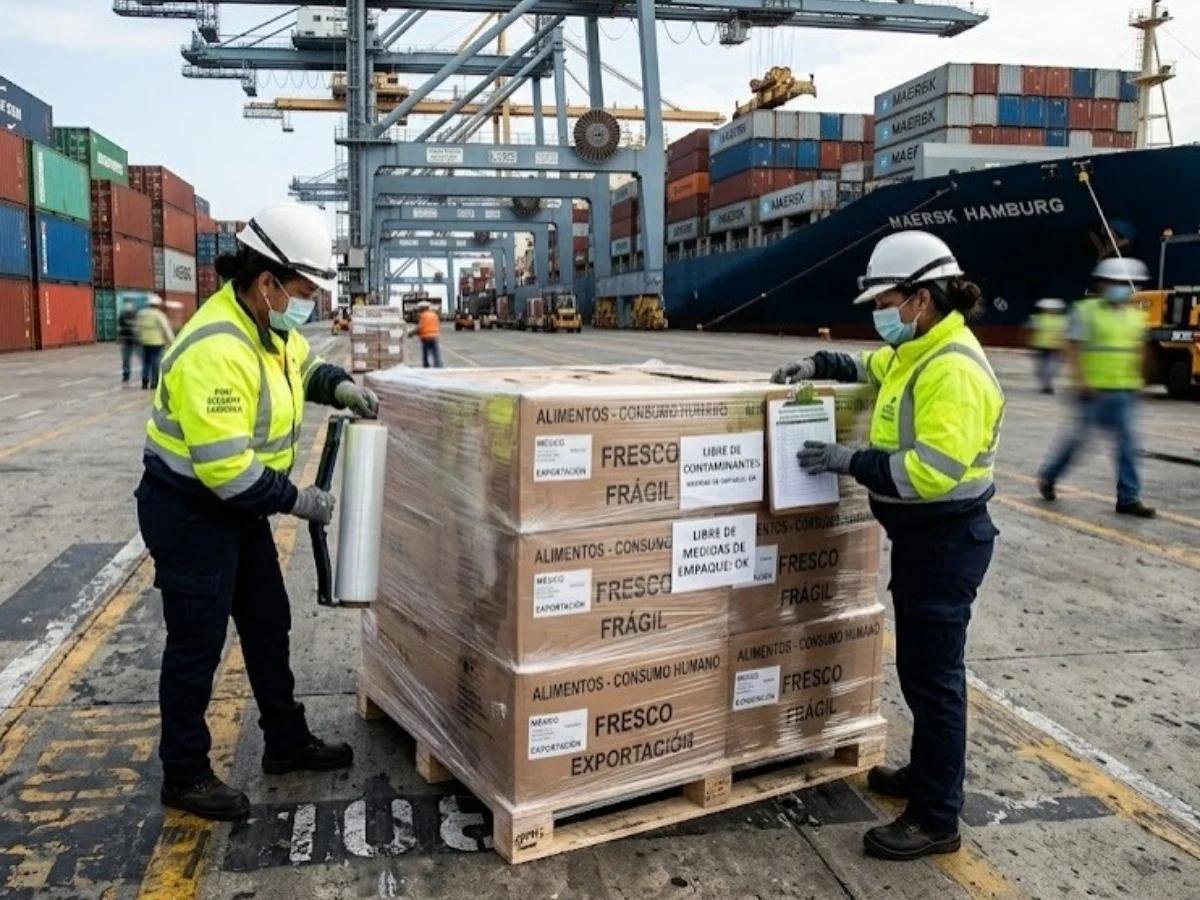
Food export packaging is an essential part of international trade. A food product may meet the required
specifications when prepared for dispatch, but unsuitable packaging or poor storage conditions can affect its
condition during transportation.
Long-distance shipments may involve several stages of handling, changes in environmental conditions, warehouse
storage, and extended transit times. Packaging must therefore be selected according to the product’s physical
properties, storage needs, and destination requirements.
Why Is Export Packaging Important?
Protection against moisture:
Moisture can affect many dry food ingredients, including dehydrated vegetable
powders and other processed products. Packaging with suitable moisture-barrier properties can help protect
products from unwanted moisture exposure.
Protection during handling and transportation:
Export shipments can be handled multiple times before
reaching the buyer. Packaging should be strong enough for the intended shipping method and compatible with
stacking, loading, unloading, and warehouse storage.
Product identification and traceability:
Clear labelling helps buyers identify the product and manage stock.
Depending on applicable requirements, labels may include the product name, net weight, batch or lot identification,
origin, ingredients, dates, and storage instructions.
Maintaining product integrity:
Appropriate packaging helps protect products against external contamination and
environmental exposure. Packaging must be supported by suitable processing, handling, storage, and quality
management practices
Selecting Packaging for Different Food Products
Dehydrated powders: Packaging should be suitable for moisture-sensitive products and protect against
contamination.
Spices and dry ingredients: The choice of material should consider aroma retention, product stability, and
storage conditions.
Grains and other bulk foods: Packaging should suit the product’s weight, handling requirements, and
transportation method.
Retail-ready products: Packaging may need additional branding, consumer information, and market-specific
labelling.
Buyers should communicate their preferred pack size, material, labelling requirements, and intended use before
confirming an order.
The Role of Packaging in International Shipping
Packaging is only one part of effective export planning. The exporter and buyer should also agree on shipment
quantities, palletisation where applicable, loading arrangements, storage conditions, and the logistics method.
For moisture-sensitive products, protecting cargo from exposure to water and unsuitable storage environments is
particularly important. Shipment planning should take the product’s characteristics and expected transit conditions
into account.
How Buyers Can Evaluate an Exporter’s Packaging Approach
Before placing an order, international buyers can ask:
• What packaging options are available for the required product?
• Are custom pack sizes or labelling arrangements possible?
• What storage conditions are recommended?
• Can product identification and batch details be provided?
• Which packaging and documentation requirements can be accommodated for the destination market?
Discussing these points early helps prevent avoidable delays and misunderstandings.